If you write an article, design a logo, create a video, or invent something useful does it belong to you?
Most people say yes. And that feeling is absolutely right.
That sense of ownership over ideas, creativity, and innovation is exactly what Intellectual Property is about.
In this article, I’ll explain Intellectual Property, step by step. No legal language, no confusion, only clear understanding.
Table of Contents
What Does “Intellectual Property” Actually Mean?
The term Intellectual Property is made of two words:
- Intellectual → something created using the mind
- Property → something that belongs to someone
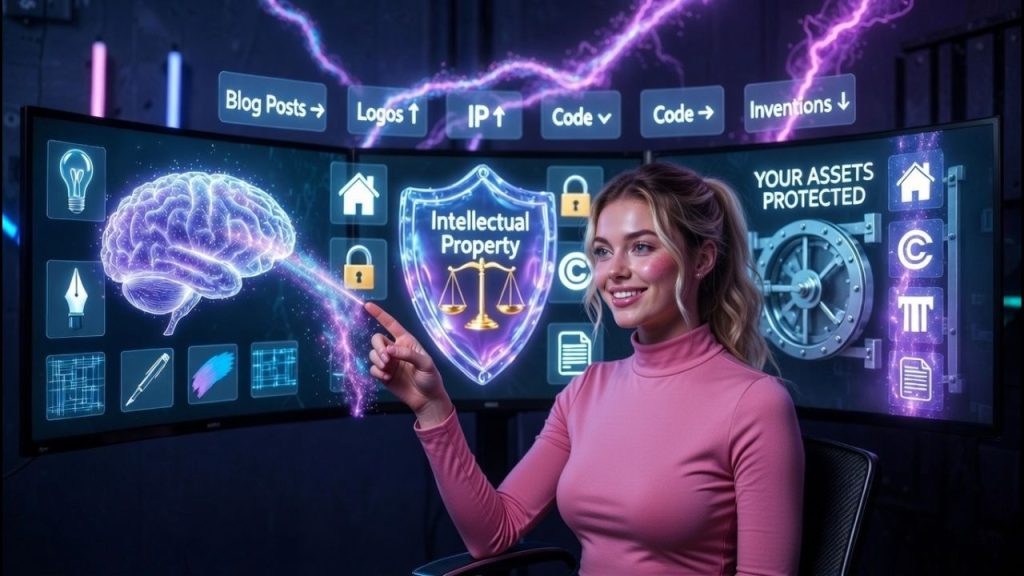
So, Intellectual Property (IP) means ideas or creations of the mind that the law treats as personal property.
Just like a house or land belongs to you, your creative work, brand identity, inventions, and original ideas also belong to you. Intellectual Property laws exist to make sure others cannot copy, steal, or misuse those ideas without permission.
IP turns ideas into legally protected assets.
Why Intellectual Property Exists (And Why You Should Care)
Now think about this for a moment.
If anyone could freely copy your work, would you still invest time, money, and effort into creating something new?
Probably not.
That’s why Intellectual Property exists.
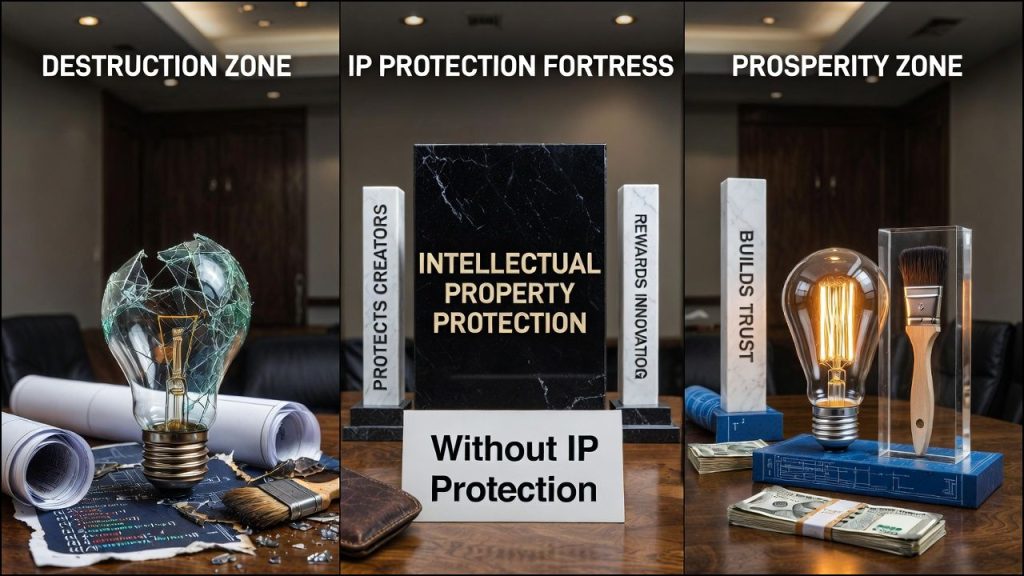
It is designed to:
- Protect original creators
- Reward creativity and innovation
- Encourage people to share ideas safely
- Build trust in business and content creation
Whether you are a blogger, business owner, developer, designer, or student, IP laws protect people like you. Even if you don’t realize it yet, IP already plays a role in your daily life.
Main Types of Intellectual Property You Should Know
Intellectual Property is not one single thing.
Different types of creations need different types of protection.
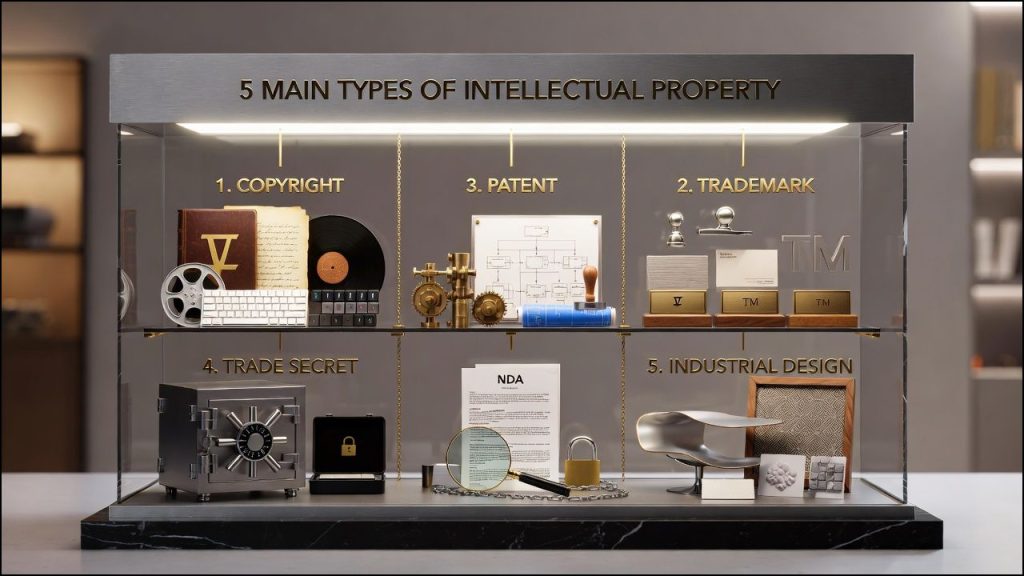
Let’s understand each one clearly.
1. Copyright – Protection for Creative Work
Copyright protects original creative content.
If you create something and fix it in a tangible form, copyright usually applies automatically.
Examples include:
- Blog posts and articles
- Books and ebooks
- Music, videos, podcasts
- Photographs and graphics
- Software code
If you write an article today, you don’t need to register it first to own it. Copyright starts the moment your work is created.
Copyright gives you the right to:
- Control copying
- Control distribution
- Decide who can reuse your work
This is especially important online, where content can be copied in seconds.
2. Trademark – Protection for Brand Identity
A trademark protects anything that helps people identify your brand.
This includes:
- Brand names
- Logos
- Taglines or slogans
- Unique symbols or designs
Think about how you recognize a brand instantly by its logo or name. That recognition is protected by trademark law.
Trademarks help:
- Prevent brand confusion
- Protect business reputation
- Build customer trust
If someone uses a similar name or logo to mislead customers, trademark law steps in.
3. Patent – Protection for Inventions
A patent protects new inventions or technical solutions.
This includes:
- Machines
- Products
- Processes
- Technical improvements
Patents are different from copyright. You must apply and get approval before patent protection starts.
In return, the inventor gets exclusive rights for a limited period. After that, the invention becomes public knowledge.
Patents encourage innovation by ensuring inventors can benefit from their hard work.
4. Trade Secrets – Protection Through Confidential
A trade secret is information that gains value because it is kept secret.
Examples include:
- Business strategies
- Algorithms
- Manufacturing processes
- Customer databases
- Secret formulas
Trade secrets don’t require registration.
They stay protected as long as they remain confidential.
Once secrecy is lost, protection is lost too.
5. Industrial Designs – Protection for Visual Appearance
Industrial design protection focuses on how a product looks, not how it works.
It covers:
- Shape
- Pattern
- Surface design
- Visual aesthetics
If the appearance of a product gives it commercial value, it can be protected as an industrial design.
Intellectual Property in Real Life
You interact with Intellectual Property every single day.
For example:
- A website logo is a trademark
- A YouTube video is copyrighted
- A mobile app feature may be patented
- A company’s strategy could be a trade secret
Even social media content falls under IP protection.
Understanding this helps you both protect your work and respect others’ rights.
Intellectual Property on the Internet
The internet makes sharing easy—but also copying easy.
IP laws help protect:
- Website content
- Images and videos
- Code and software
- Brand identity online
Unauthorized use of protected content can lead to takedowns, warnings, or legal action. That’s why awareness matters, especially for website owners and content creators.
What Happens if Intellectual Property is Violated?
When someone uses protected content without permission, it becomes Intellectual Property infringement.
Possible consequences include:
- Content removal
- Legal notices
- Financial penalties
- Loss of reputation
Most issues happen due to lack of awareness, not bad intentions. Understanding IP helps you avoid mistakes before they happen.
How You Can Protect Your Intellectual Property
Protecting your IP doesn’t always mean legal complexity.
Start with:
- Creating original work
- Keeping records of creation
- Using clear ownership details
- Respecting others’ content
- Understanding basic IP rules
Awareness itself is one of the strongest protections.
Conclusion
Intellectual Property exists to protect ideas, creativity, and innovation. It ensures that the effort you put into creating something meaningful is respected and legally protected.
Once you understand IP, you stop seeing ideas as “just ideas.”
You start seeing them as valuable assets.
And that understanding puts you in control, whether you are creating, sharing, or building something of your own.