
Offshore VPS Hosting is often talked about in extremes. Some see it as protection from sudden takedowns, while others assume it is risky or questionable. In practice, it is neither. It becomes relevant the moment hosting stops being just about RAM and bandwidth and starts being about how complaints are handled.
When a notice arrives and a provider reacts instantly to reduce liability, the importance of jurisdiction becomes clear. In some countries, action comes first and review later. In others, formal documentation and legal process come before suspension.
That difference shapes how stable your project remains under pressure. This article explains what Offshore VPS Hosting truly means, how it works technically, why location matters, and when it makes practical sense for projects that require consistency and structured handling of disputes.
Table of Contents
What Is Offshore VPS Hosting?
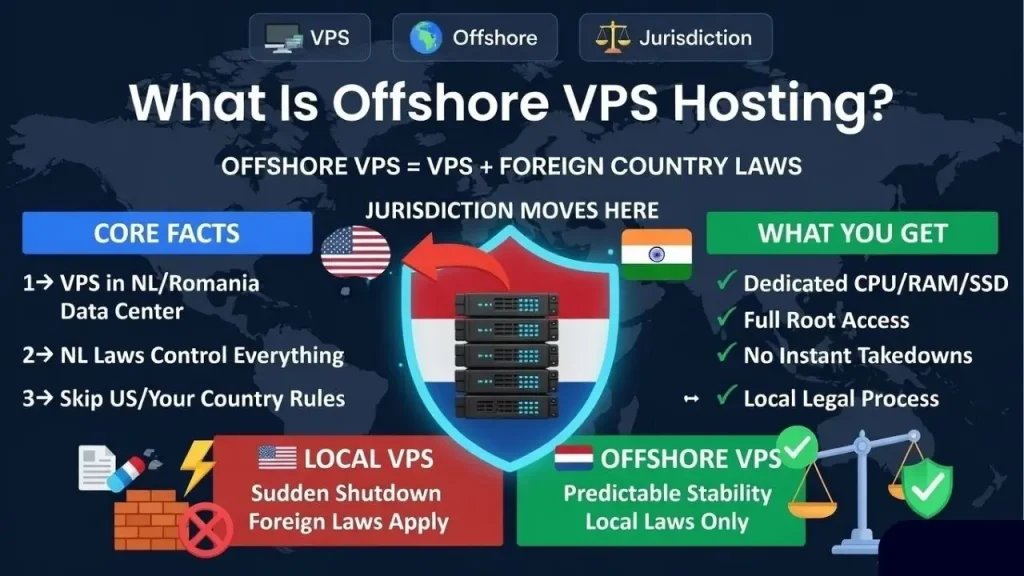
Offshore VPS Hosting means hosting a Virtual Private Server (VPS) in a country different from your own, usually outside the United States or your local jurisdiction.
In simple terms:
- Your VPS runs on servers located in a foreign country
- The hosting provider follows local laws of that country
- Legal and policy decisions are handled under offshore jurisdiction
You still get a standard VPS with dedicated resources, but under a different legal environment.
What Is a VPS?
A VPS, or Virtual Private Server, is a virtual environment created within a physical server using virtualization technology. Instead of sharing everything like in basic shared hosting, a VPS divides a powerful physical machine into multiple independent virtual servers. Each one operates as if it were its own dedicated system.
With a VPS, you typically receive:
- Allocated CPU power, RAM, and storage resources
- Full root or administrator level access
- Strong isolation from other users on the same physical server
This setup gives you more control, better performance stability, and the freedom to configure your server environment according to your project’s needs.
When this virtual server is hosted in another country under a different legal framework, it becomes Offshore VPS Hosting, combining technical independence with jurisdictional flexibility.
Why Offshore VPS Hosting Exists
Online rules are enforced very differently around the world.
In some countries:
- Complaints lead to instant suspensions
- Hosting providers act first to protect themselves
- Servers are disabled before proper review
In other countries:
- Due process is followed
- Legal documentation is required
- Providers act more carefully
Offshore VPS hosting exists because many website owners want:
- Fewer sudden shutdowns
- Fair handling of complaints
- Stronger privacy protection
- Predictable hosting behavior
It is about reducing unnecessary risk, not avoiding responsibility.
How Offshore VPS Hosting Works in Practice
From a technical point of view, offshore VPS hosting works exactly like normal VPS hosting:
- You choose a VPS plan
- You deploy your operating system
- You install your website or application
- Users access it through the internet
The real difference appears only when an issue arises, such as:
- A copyright complaint
- A policy violation report
- A legal request
With offshore VPS hosting, providers usually:
- Review the issue under local law
- Require proper legal documents
- Avoid instant suspensions unless absolutely necessary
What Offshore VPS Hosting Is NOT
This is a critical point.
Offshore VPS hosting does not mean:
- Illegal content is allowed
- Law enforcement is ignored
- There are no hosting rules
- Guaranteed anonymity
Most offshore VPS providers strictly ban:
- Child exploitation material
- Malware, hacking tools, or botnets
- Scams, phishing, or fraud
- Terrorism related content
Offshore VPS hosting changes jurisdiction, not criminal responsibility.
4 Benefits of Offshore VPS Hosting
Offshore VPS hosting offers more than just server resources in another country. It provides legal flexibility, stronger privacy options, & a more structured approach to handling complaints, helping projects stay stable under pressure.
- Legal Flexibility: Your VPS is governed by the laws of the hosting country, not automatic foreign enforcement.
- Better Stability: Servers are less likely to be taken offline due to unverified or abusive complaints.
- Stronger Privacy: Many offshore providers follow stricter privacy policies and data protection practices.
- Full Server Control: You get root access and complete control over your VPS environment.
Common Use Cases for Offshore VPS Hosting
Offshore VPS hosting is commonly used for:
- Media and content heavy websites
- Streaming platforms
- File hosting services
- Adult websites with legal content
- Research and archival projects
- Websites frequently targeted by complaints
These projects are legal but sensitive to sudden hosting disruptions.
Popular Locations for Offshore VPS Hosting
Offshore VPS hosting is usually offered in countries such as:
- Netherlands
- Romania
- Moldova
- Luxembourg
- Switzerland
- Hong Kong
These locations are popular because they:
- Have modern data centers
- Follow independent legal frameworks
- Do not automatically enforce foreign laws
Why Location Matters in Offshore VPS Hosting
All offshore VPS locations share one key feature:
they do not automatically act on foreign legal requests.
Instead, providers typically:
- Follow local legal procedures
- Require valid court orders
- Avoid unnecessary service interruptions
This legal independence is what makes offshore VPS hosting valuable.
Offshore VPS Hosting vs Local VPS Hosting
| Aspect | Local VPS Hosting | Offshore VPS Hosting |
| Jurisdiction | Home country | Foreign country |
| Complaint handling | Often instant | Procedural |
| Privacy | Moderate | Often stronger |
| Policy strictness | High | More flexible |
| Stability under pressure | Lower | Higher |
The difference is not speed or performance, it’s how problems are handled.
Is Offshore VPS Hosting Legal?
Yes, offshore VPS hosting is legal when used properly.
It is legal because:
- You are allowed to choose where your server is hosted
- Using foreign hosting services is permitted
- Providers follow their local laws
Problems arise only when criminal content is hosted, which is illegal everywhere.
Who Should Consider Offshore VPS Hosting?
Offshore VPS hosting is not necessary for every project, but in certain situations it becomes a practical choice. It is especially relevant when hosting stability and legal handling matter as much as technical performance.
It may be suitable if:
- Your content is completely legal but considered sensitive in some regions
- You regularly receive complaints, reports, or automated takedown notices
- Your project cannot afford unexpected downtime
- You prioritize privacy and stronger control over your server environment
- You prefer hosting providers that follow formal legal process before taking action
For projects that operate within the law yet face frequent scrutiny, offshore VPS hosting can provide a more predictable and structured environment.
Who Should Avoid Offshore VPS Hosting?
Offshore VPS hosting is not a solution for bypassing laws or avoiding accountability. Jurisdiction changes do not remove criminal responsibility.
It is not suitable if:
- You intend to host illegal material
- You are attempting to evade law enforcement
- You knowingly violate local or international regulations
Responsible usage remains essential. Offshore VPS hosting offers legal flexibility and procedural stability, but it does not protect unlawful activity.
Advantages and Limitations of Offshore VPS Hosting
Before choosing offshore VPS hosting, it’s important to understand both its strengths and its boundaries. It can offer meaningful advantages in the right situation, but it is not a universal solution for every project.
Advantages
- Greater Legal Flexibility: Your VPS operates under the laws of the hosting country, which may follow a more structured and procedural approach when handling complaints.
- Predictable Handling of Issues: Instead of immediate suspensions, many offshore providers require proper documentation and legal review before taking action.
- Stronger Privacy Options: Certain offshore jurisdictions follow strict data protection practices, offering an added layer of privacy for legitimate projects.
- Full VPS Control: You still receive root access, dedicated resources, and complete control over your server environment, just like any standard VPS setup.
Limitations
- Potential Latency Differences: If your audience is far from the server location, slightly higher latency can occur, depending on network routing and distance.
- Higher Costs in Some Regions: Offshore infrastructure in privacy focused jurisdictions may cost more than standard local VPS plans.
- No Protection for Illegal Activity: Offshore VPS hosting changes jurisdiction, not criminal accountability. Serious legal violations remain illegal everywhere.
Understanding both sides helps set realistic expectations and ensures that offshore VPS hosting is chosen for the right reasons.
Conclusion
Offshore VPS hosting is not about hiding or breaking rules. It is about choosing the right jurisdiction for your server and your project.
In an online environment where enforcement is often automated and aggressive, offshore VPS hosting provides stability, control, and fair handling of complaints.
For responsible website owners who want fewer surprises, stronger privacy, and hosting that respects due process, offshore VPS hosting is a practical and legitimate solution built for the modern internet.